Replace missing teeth with dental implants.
Dr. Fahimay Naqvi, general dentist and Fellow of the International Congress of Oral Implantologists, will help you decide if implants suit you.
Request a call
Leave your name and number and we will call you to book.
And their limits, explained below
Not sure whether implants suit you?
A consultation is the way to find out.
Missing
a tooth?
Consultation & X-rays
01Your treatment plan
02Implant placement
03Healing & new tooth
04

What is a
dental implant?
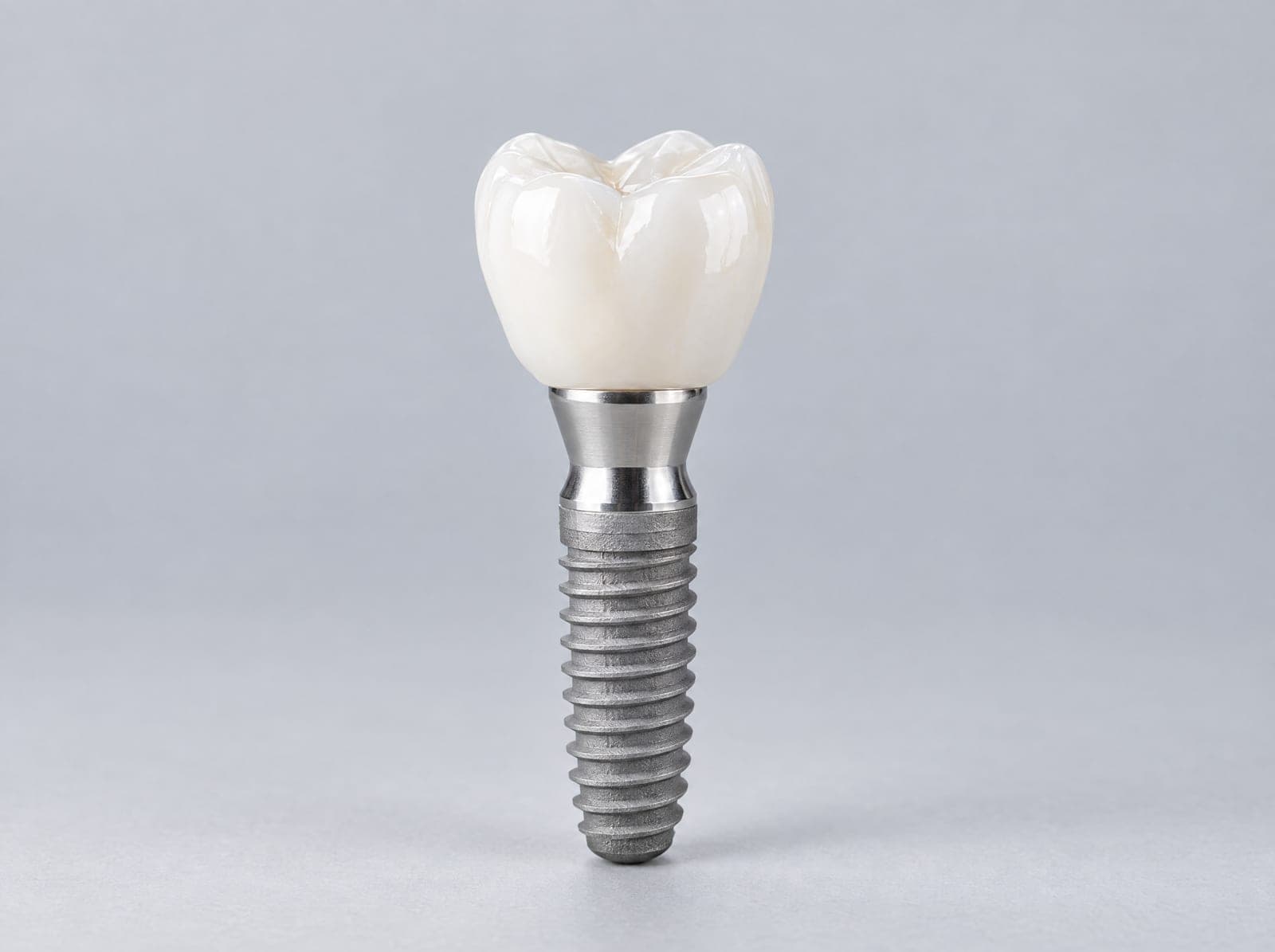
One implant can replace a single tooth, and two or more can support a bridge for several teeth. For people missing most or all of their teeth, implants can be part of a full-mouth reconstruction, or hold a denture firmly in place. Which option suits you depends on a clinical assessment.
- 01
The implant
A small titanium post placed in the jawbone. Over a few months the bone grows around it, so it acts like the root of a tooth.
- 02
The abutment
A small connector that sits on top of the implant and holds the visible tooth in place.
- 03
The restoration
The part you see: a crown, a bridge, or a denture, shaped and coloured to suit your other teeth.
How implants
can help
- They can let you chew and speak with more confidence than a loose denture.
- A crown or bridge on implants stays fixed in place, with no adhesive.
- They do not need the neighbouring teeth to be filed down, as a traditional bridge does.
- They put load on the jawbone, which can help limit the bone loss that follows losing a tooth.
- The crown is shaped and coloured to blend in with your own teeth.
When you might
consider one
- A tooth has been lost to decay, gum disease, or an injury.
- A tooth is cracked or failing and cannot be repaired.
- A gap is making it harder to chew, or neighbouring teeth are starting to shift.
- Your denture moves when you eat or talk.
- An old bridge needs replacing and you want to compare options.
Who implants
often suit
- Adults with one or more missing teeth, or a tooth that cannot be saved
- People whose dentures feel loose and who want them to stay in place more steadily
- People in reasonable general health whose gums are healthy, or can be treated first
- People with enough jawbone to hold an implant, or who are open to bone grafting first
- People who can commit to daily cleaning and regular checkups
Who may need
another option
- Children and teenagers whose jaws are still growing
- People with uncontrolled diabetes or other conditions that slow healing
- People who smoke heavily, which is linked to higher rates of implant failure
- People taking certain medications that affect bone healing (tell us about every medication you take)
- People with untreated gum disease, until it is under control
These are general guides, not a diagnosis. Whether implants suit you depends on a clinical assessment.
The honest part:
risks and limits
- It is surgery. As with any oral surgery there is a risk of infection, bleeding, and swelling, and, less often, nerve or sinus problems.
- It takes time. Treatment usually runs over several months, and longer if bone grafting is needed first.
- Implants can fail. Sometimes the bone does not bond with the implant, or an implant loosens later, and it may need to be removed or replaced.
- They need care. The gum around an implant can become inflamed if it is not cleaned well, which can lead to bone loss around the implant.
- Cost. Implants usually cost more up front than a bridge or denture, and insurance coverage varies.
Individual results vary. Bridges and dentures remain good options for many people, and we will discuss them with you.
Talk it through with us
Leave your name and number and we will call you to book.
The process of
placing implants
- 01
Consultation
An exam and digital X-rays. We talk through your goals, your health history, and every option, including ones that do not involve implants.
- 02
Treatment plan
A written plan with the steps, the timeline, and the fees, so you can decide without pressure.
- 03
Implant placement
The implant is placed in the jaw under local anaesthetic. Sedation options are available if you feel anxious.
- 04
Healing
Over roughly three to six months the bone grows around the implant. A temporary tooth can often be worn in the meantime.
- 05
Your new tooth
A custom crown, bridge, or denture is attached to the implant, then we check your bite and how it feels.
- 06
Long-term care
Daily cleaning plus regular checkups and cleanings help look after the implant and the gum around it.
Caring for
dental implants
- Brush twice a day and clean between your teeth, including around the implant.
- Keep up regular checkups and cleanings so we can check the gum and bone around it.
- Tell us if the gum around an implant becomes sore, red, swollen, or bleeds.
- If you clench or grind your teeth, ask us whether a night guard would help.
- Smoking is linked to more problems with implants, so it is worth discussing with us.
Your dentist
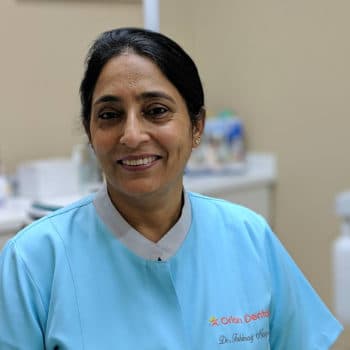
Dr. Fahimay
Naqvi
Dr. Naqvi is a general dentist who has provided dental care since 1989. She earned her BDS and MDS from Bangalore University and qualified from the University of Toronto in 2005. She took over the Scarborough practice in 2007 and opened the Milton office in 2010.
She has continued her education in implant dentistry: she is a Fellow of the International Congress of Oral Implantologists and an Associate Fellow of the American Academy of Implant Dentistry, and a member of the Royal College of Dental Surgeons of Ontario, the Ontario Dental Association, and the Canadian Dental Association.
Dr. Naqvi is a general dentist, not a certified specialist. If your case needs a specialist, we can arrange a referral.
Orion Dental
A family and general dental practice with two offices in the Greater Toronto Area. We provide checkups and cleanings, fillings, crowns and bridges, dentures, and implant treatment, direct-bill most insurance plans, and are a Canadian Dental Care Plan (CDCP) provider.

Milton
1225 Maple Ave, Unit 100, Milton, ON L9T 0A5
Mon 9–5 · Tue–Fri 9–6 · Alternate Saturdays 8–1
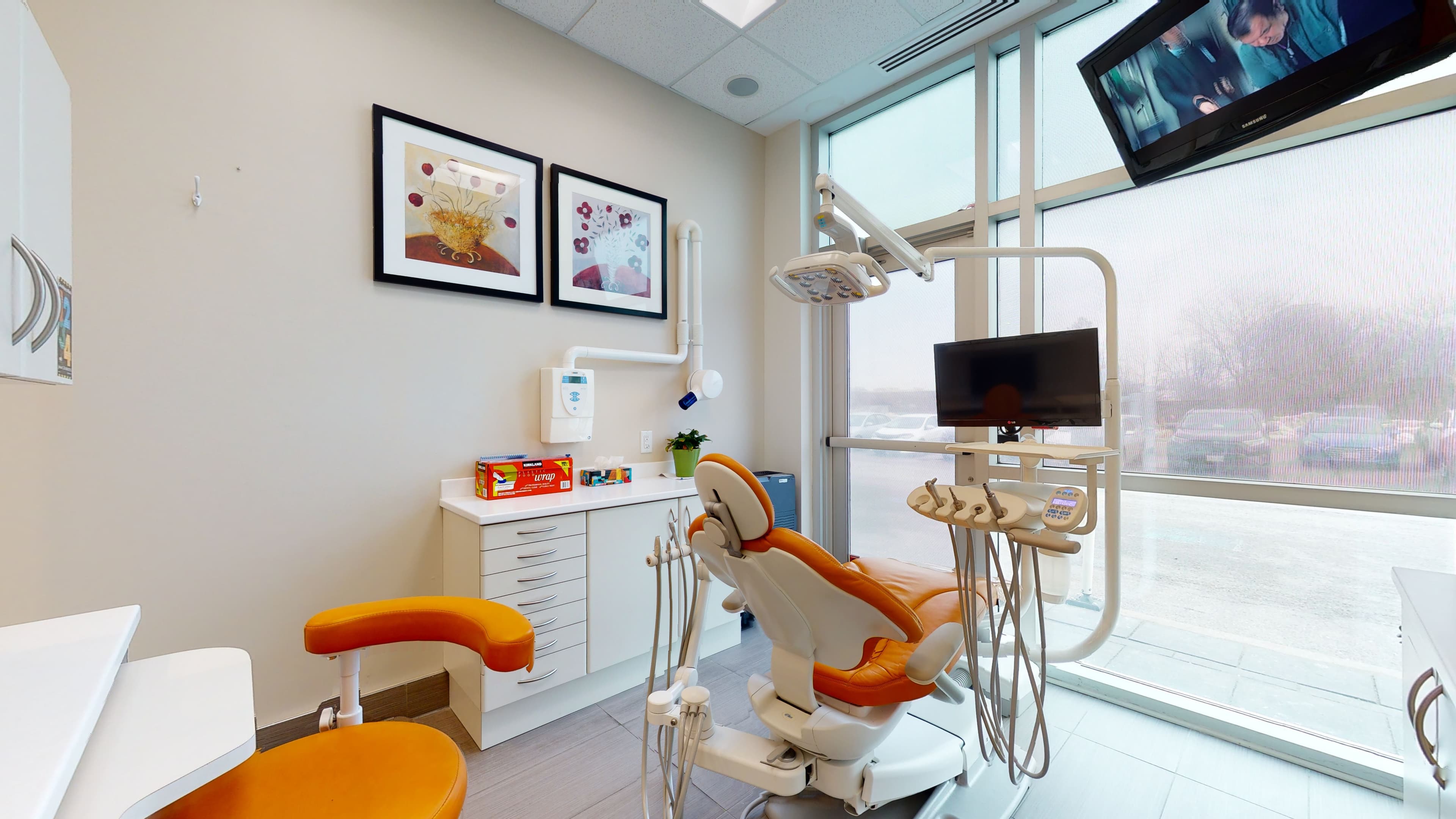
Scarborough
520 Ellesmere Rd, Unit 105, Scarborough, ON M1R 0B1
Mon–Fri 9–5 · Alternate Saturdays 8–1
Common
questions
How much do dental implants cost?
Fees depend on how many teeth are being replaced, whether bone grafting is needed, and the type of crown, bridge, or denture. We give you a written estimate at your consultation, before any treatment starts.
Will my insurance cover implants?
Coverage varies widely between plans. Some plans cover part of the cost and some do not cover implants at all. We direct-bill most insurance plans and can send a pre-treatment estimate to your insurer so you know what to expect.
Does getting an implant hurt?
Implants are placed under local anaesthetic, and we work to keep you comfortable throughout. Some soreness, swelling, or bruising for a few days afterwards is common. We will explain what to expect and how to look after yourself.
How long do implants last?
With good daily care and regular checkups, implants can last many years. How long an individual implant lasts depends on your oral hygiene, bone health, general health, and habits such as smoking or grinding. The crown on top may need replacing over time through normal wear.
How long does the whole process take?
Usually several months from placement to the final tooth, mostly to allow healing. If bone grafting is needed first, it takes longer. We give you a timeline at your consultation.
What if implants are not right for me?
Bridges and dentures are well-established ways to replace missing teeth. If implants are not a good fit, we will explain why and talk you through the options that are.
Ready to find out more?
Leave your name and number and we will call you to book.